Pizzerias as Community Gathering Places
Beyond their function as food service establishments, pizzerias serve as vital community gathering places across America. These establishments provide spaces where people from diverse backgrounds can come together to share meals, conversation, and experiences. The casual, welcoming atmosphere typical of pizzerias creates an environment where social barriers feel reduced, allowing for natural interaction and community building. This social dimension represents one of the most significant aspects of the American pizzeria experience.
The role of pizzerias as community anchors stems from several factors. Their accessibility in terms of pricing, their family-friendly environments, and their presence in neighborhoods of all types make them natural gathering spots. Whether located in urban centers, suburban developments, or small towns, pizzerias often become familiar landmarks where community members know they can find good food and good company. This familiarity and accessibility help establish pizzerias as enduring fixtures in the social fabric of American communities.
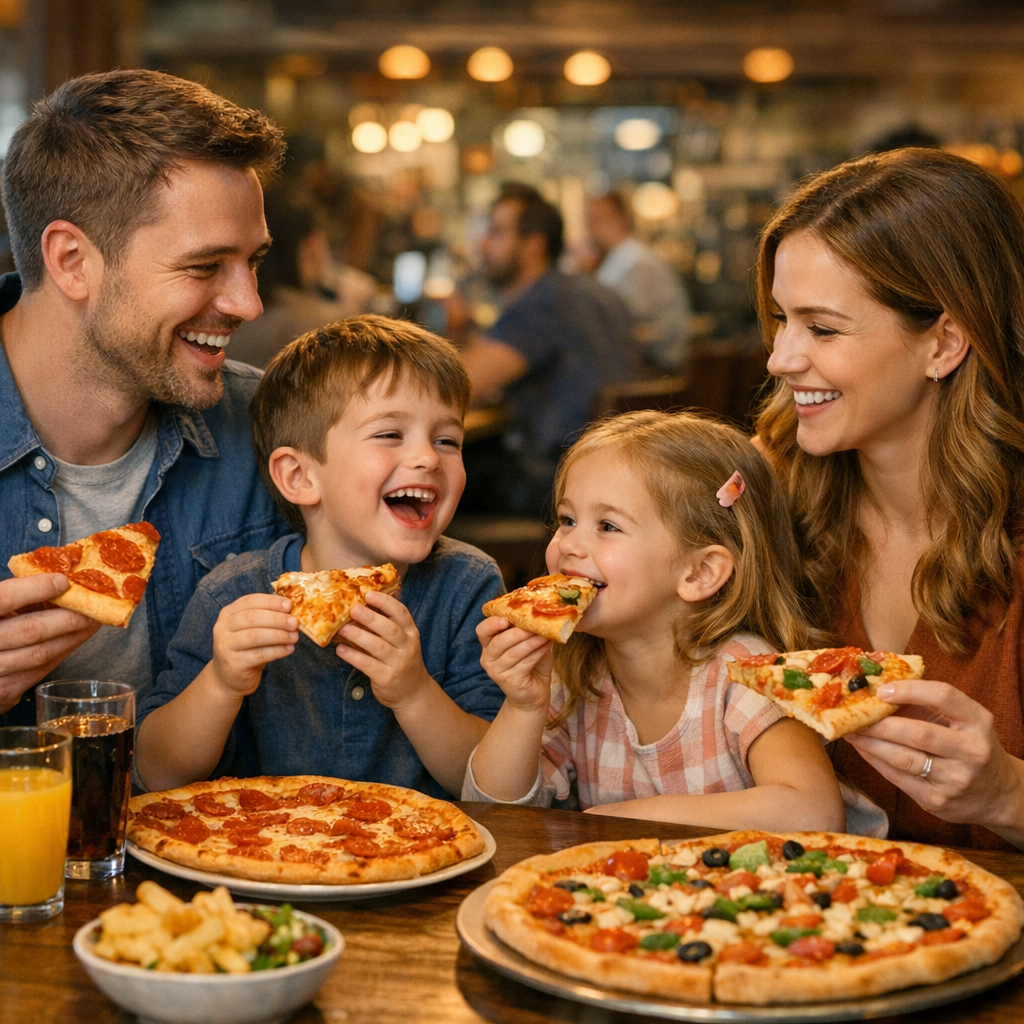
Pizzerias provide welcoming spaces for families and community gatherings
The Shareable Nature of Pizza
The inherent shareability of pizza contributes significantly to its social function. Unlike individual meals that may isolate diners, pizza is designed to be shared, with large pies typically cut into multiple slices meant for communal consumption. This format naturally encourages interaction and conversation, as diners reach for slices, discuss topping preferences, and enjoy the collective experience of sharing a meal. The physical act of sharing pizza creates bonds and facilitates social connection in ways that individually plated meals often cannot.
This shareable quality makes pizzerias particularly well-suited for group dining occasions. Birthday parties, team celebrations, family reunions, and casual get-togethers with friends all find natural homes in pizzeria settings. The flexibility of pizza—its ability to accommodate various dietary preferences through different toppings and its scalability to feed groups of different sizes—further enhances its suitability for social occasions. These characteristics have helped establish pizza as the default choice for many types of group celebrations and gatherings.
Casual Dining and Social Comfort
The casual dining environment characteristic of most pizzerias plays a crucial role in their social function. Unlike formal restaurants where dress codes, service protocols, and atmosphere may create social pressure, pizzerias typically offer relaxed, unpretentious environments where people feel comfortable being themselves. This lack of formality removes social barriers and allows for more authentic interaction and connection among diners.
This casual atmosphere extends to service style as well. The typically less formal service in pizzerias—whether counter service, table service with a relaxed approach, or a combination of both—creates a low-pressure environment where diners can control the pace of their experience. This flexibility allows groups to linger over conversation without feeling rushed, contributing to the social bonding that occurs during extended meals. The combination of casual atmosphere and flexible service makes pizzerias ideal venues for extended social interaction.
Intergenerational Appeal
Pizzerias possess a rare quality in the restaurant world: they appeal equally to children, adults, and seniors. This intergenerational appeal makes them uniquely valuable as family gathering places where multiple generations can dine together comfortably. Children enjoy the familiar, approachable food and casual environment, while adults appreciate the convenience, value, and social atmosphere. Seniors often value the familiarity and tradition that established pizzerias represent in their communities.
This broad demographic appeal enables pizzerias to serve as true community institutions where people of all ages feel welcome. The ability to accommodate different age groups simultaneously—without any group feeling out of place—represents a significant social achievement. Many families develop traditions around pizzeria visits, creating memories and associations that span generations. These intergenerational connections strengthen community bonds and contribute to the enduring place of pizzerias in American social life.
Economic Accessibility and Social Inclusion
The relative affordability of pizza compared to many other restaurant options contributes to pizzerias' role as socially inclusive gathering places. While fine dining establishments may be accessible only to certain economic segments, pizzerias typically offer pricing that allows participation across economic spectrums. This economic accessibility helps ensure that pizzerias can serve as truly community-wide gathering places rather than venues limited to specific demographic groups.
This accessibility extends beyond simple pricing to include factors such as flexible portion sizes, the ability to share meals, and the availability of both dine-in and takeaway options. These features allow people with different budgets and circumstances to participate in pizzeria experiences in ways that work for them. The result is a more inclusive social environment where community members from diverse economic backgrounds can interact and share experiences, contributing to social cohesion and community building.
Pizzerias in Community Traditions and Celebrations
Pizzerias have become embedded in American community traditions and celebrations in ways that transcend their function as mere restaurants. From local sports team victories to school achievements, from neighborhood block parties to workplace milestones, pizzerias often serve as the default venue for celebration. This role in community life reflects both the practical advantages of pizza as celebration food and the emotional associations that communities develop with their local pizzerias.
Many communities have specific traditions involving their local pizzerias—Friday night family dinners, post-game team gatherings, or regular meetups for social groups. These traditions help create continuity and shared experiences that strengthen community identity. The pizzeria becomes not just a place to eat but a setting for important community rituals and celebrations. This integration into community life represents perhaps the deepest level of social significance that pizzerias achieve.
The Enduring Social Significance of Pizzerias
The social role of pizzerias in American culture extends far beyond their function as food service establishments. They serve as community gathering places, facilitators of social interaction, and venues for celebration and tradition. Their unique combination of accessibility, shareability, casual atmosphere, and intergenerational appeal enables them to fulfill social functions that few other restaurant types can match.
As American society continues to evolve, the fundamental social needs that pizzerias address—the need for community gathering places, for accessible venues where diverse groups can interact, for settings that facilitate social bonding—remain constant. The enduring popularity of pizzerias suggests that they will continue to play important social roles in American communities for generations to come. Understanding these social dimensions helps explain why pizzerias have become such beloved and enduring institutions in American culture.