The Pizzeria Kitchen Environment
The kitchen of a pizzeria represents a carefully designed workspace optimized for the efficient production of high-quality pizzas. Unlike general restaurant kitchens that must accommodate diverse menu items, pizzeria kitchens are specifically configured around the pizza preparation process, with equipment placement, workflow patterns, and staffing arrangements all tailored to support this focused operation. This specialization enables pizzerias to maintain consistency and quality while managing the often high volume of orders typical of successful pizza establishments.
The physical layout of a pizzeria kitchen typically centers around the pizza oven, which serves as both the focal point and the final stage of the preparation process. Surrounding this core element are designated areas for dough preparation, ingredient assembly, and finishing tasks. This spatial organization minimizes unnecessary movement and maximizes efficiency, allowing kitchen staff to work smoothly through the various stages of pizza production without congestion or bottlenecks.
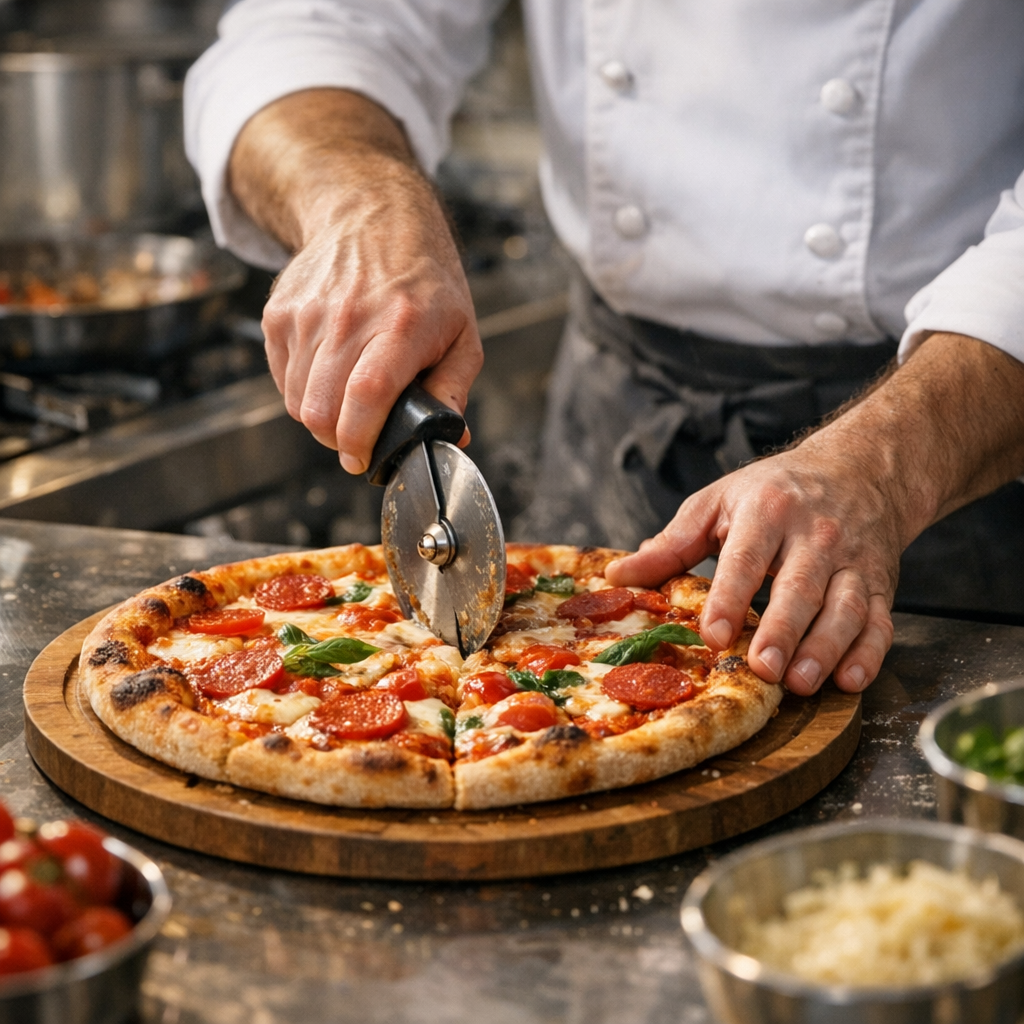
Precision and timing are essential in the pizzeria kitchen workflow
Dough Preparation Station
The dough preparation area represents the foundation of pizzeria operations, as the quality of the dough fundamentally influences the final product. This station typically features large work surfaces for kneading and shaping dough, along with storage containers for dough balls at various stages of fermentation. Experienced pizzeria staff understand that proper dough preparation requires attention to factors such as hydration levels, fermentation time, and temperature control, all of which contribute to the texture and flavor of the finished pizza.
In many pizzerias, dough preparation begins well before service hours, with staff mixing and portioning dough in anticipation of demand. This advance preparation allows dough to develop proper fermentation characteristics while ensuring that dough balls are ready for shaping when orders arrive. The timing and sequencing of dough preparation represent critical operational considerations that distinguish well-run pizzerias from those that struggle with consistency or quality.
Ingredient Assembly and Topping
The ingredient assembly area serves as the creative heart of the pizzeria kitchen, where individual pizzas take shape through the careful application of sauces, cheeses, and toppings. This station requires careful organization, with ingredients arranged for efficient access and maintained at appropriate temperatures to ensure freshness and food safety. The layout typically follows the logical sequence of pizza assembly, with sauce, cheese, and various toppings positioned to facilitate smooth workflow.
Skilled pizzeria workers develop expertise in portioning ingredients consistently, ensuring that each pizza receives the appropriate amount of each component regardless of who prepares it. This consistency represents a key quality indicator for pizzerias and requires both training and experience to achieve. The topping process also demands attention to detail, as proper ingredient distribution affects both the visual appeal and the eating experience of the final product.
The Baking Process
The pizza oven represents the most critical piece of equipment in the pizzeria kitchen, and the baking process requires careful monitoring and timing. Different types of ovens—wood-fired, gas, or electric—each impart distinct characteristics to the finished pizza, and experienced pizzeria operators understand how to work with their specific equipment to achieve optimal results. The baking process involves managing temperature, cooking time, and oven placement to ensure proper crust development, cheese melting, and ingredient cooking.
Timing coordination between the preparation and baking stages represents a crucial operational challenge in pizzeria kitchens. Staff must pace their preparation work to match oven capacity and cooking times, ensuring that pizzas enter the oven at the right moment and are removed at the peak of quality. This coordination requires experience, communication, and the ability to anticipate order flow, particularly during busy periods when multiple pizzas may be in various stages of preparation simultaneously.
Finishing and Quality Control
After baking, pizzas move to the finishing station where final quality checks occur and any post-baking additions are made. This stage represents the last opportunity to ensure that each pizza meets the establishment's standards before it reaches the customer. Quality control measures may include visual inspection, temperature verification, and assessment of crust texture and ingredient distribution. Pizzerias that maintain high standards typically have established protocols for handling pizzas that do not meet quality criteria.
The finishing process also involves proper cutting and packaging, whether for dine-in service, takeaway, or delivery. Each service context requires slightly different handling, and experienced kitchen staff understand these nuances. For dine-in orders, pizzas may be transferred to serving plates or cutting boards, while takeaway and delivery orders require appropriate packaging that maintains temperature and presentation during transport. This attention to detail in the finishing stage helps ensure customer satisfaction regardless of how the pizza is consumed.
Workflow Coordination and Communication
Successful pizzeria kitchen operations depend on effective workflow coordination and clear communication among staff members. The various preparation stages must work in harmony, with each team member understanding their role and how it connects to the overall process. During busy periods, this coordination becomes particularly critical, as the kitchen must manage multiple orders simultaneously while maintaining quality and service standards.
Communication systems in pizzeria kitchens may include verbal orders, ticket systems, or digital displays, depending on the size and sophistication of the operation. Regardless of the specific system used, the goal remains the same: ensuring that information flows clearly and accurately between front-of-house staff taking orders and back-of-house staff preparing them. This communication infrastructure, combined with well-trained staff and efficient processes, enables pizzerias to deliver consistent quality even under demanding conditions.
Equipment and Tool Maintenance
The specialized equipment used in pizzeria kitchens requires regular maintenance to ensure optimal performance and food safety. Pizza ovens need periodic cleaning and calibration, preparation surfaces must be sanitized regularly, and tools such as pizza peels, cutters, and docker require proper care and replacement when worn. Established pizzerias typically have maintenance schedules and protocols to address these needs, recognizing that equipment reliability directly affects operational efficiency and product quality.
Beyond routine maintenance, successful pizzerias also invest in equipment upgrades and replacements as technology and techniques evolve. The balance between maintaining proven equipment and adopting new innovations represents an ongoing consideration for pizzeria operators. Those who manage this balance effectively can leverage technological improvements while preserving the traditional methods and quality standards that define their establishment's character.